Fetch Is Not the Only Game. Let Me Explain.

I’m guilty of it too. Defaulting to throwing the ball. The same old routine. Throw it. Chase it. Retrieve it. Repeat it. It sounds like the worst DaftPunk song ever. Whilst it works and our dogs love it because it taps into instinct, movement and pursuit it’s not in reality proper enrichment for the intelligent mind of our dogs. Repetition without variation is not enrichment. It is, however, exercise, and it’s important to separate them out as they are not the same thing.

“Fetch” has quietly become the universal answer to “how do I tire my dog out?” The logic feels obvious. If they run hard, they’ll rest harder and sometimes that is true. But research in canine cognition suggests that mental engagement can be more neurologically tiring than repetitive physical exertion alone. Short problem-solving tasks often reduce stress behaviours more effectively than repetitive sprinting without structure. As an attentive Guardian, you’ve probably noticed this yourself. To the more attentive of you, you’ll have noticed how long sniffing walks can settle your dog much more deeply than a frantic session chasing after a ball. Whilst exercise and activity is good, your dog needs more than movement. They need engagement and enrichment.

Now for the science. 

High intensity fetch elevates adrenaline and cortisol. That is not inherently negative. These are natural responses linked to excitement and drive. But behaviourists increasingly speak about arousal stacking. Arousal stacking is when stimulation layers repeatedly without regulation, behaviour begins to shift. This has been evidenced to weaken impulse control and as a result, restlessness builds. Variation in their games and play time prevents that build up. As guardians, our role is not simply to exhaust. It is to balance.

When we introduce variation into something as simple as a tennis ball, the outcome changes entirely. Let me explain a few alternatives that build on that.

Memory Retrieve

Memory retrieval shifts the game away from reflexive chase and into working recall. Instead of throwing immediately, place the ball down while your dog watches. Walk away together and create distance. Add a short pause, then send your dog back to locate it.

The change looks small, but it is meaningful. Your dog is no longer reacting to movement. They are remembering location. That engages working memory and spatial processing rather than pure pursuit. In canine cognition research, tasks that require recall, problem solving and delayed action are often more mentally demanding than repetitive sprinting, even when the physical effort looks lower.

The pause is doing a lot of the work here. It forces your dog to hold information and regulate excitement before acting. That combination of recall and restraint builds focus. It also changes the emotional tone of the game. Instead of escalating into a chase loop, your dog is thinking, pausing, then acting with purpose.

You can increase difficulty gradually. Start with your dog watching you place the ball in an obvious spot. Then progress to placing it behind an object, or leaving the area for longer before sending them back. Eventually, you can combine memory with light scent work by placing the ball under leaves or in longer grass, so your dog has to recall the general area and then use their nose to finish the task.

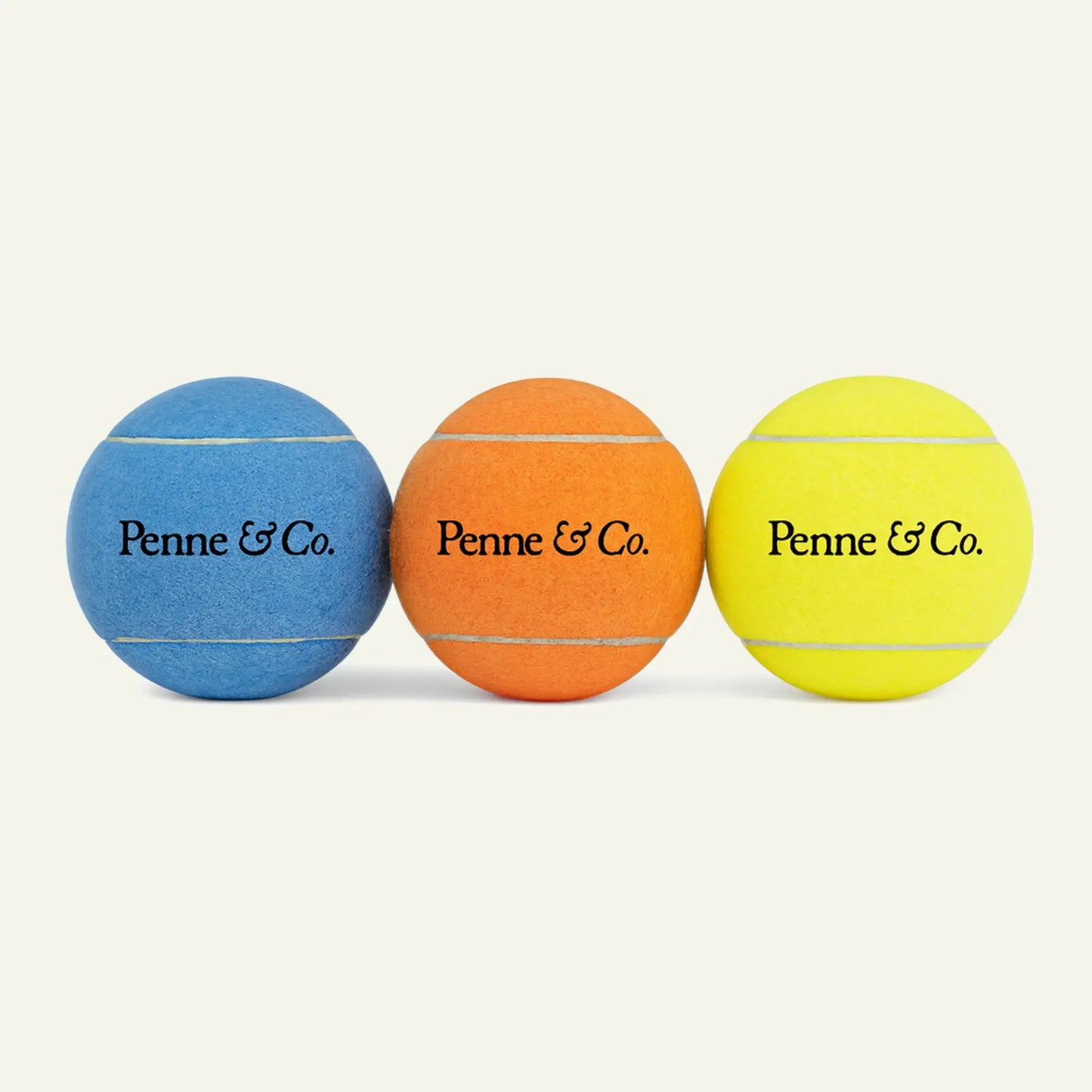
Stimulation match: Yellow Ball

Balanced visibility and pace for cognitive work that engages your dog without pushing arousal too high.

Ball, Scent, Hunt.

A scent hunt shifts the sense being prioritised. Rub the ball between your hands or on something that holds a particular scent and allow your dog to take in the scent properly. Then hide it in grass, behind a log, under a bench or partially buried beneath leaves. You can increase difficulty by covering it lightly so scent, not sight, leads the search.

This engages natural foraging behaviour. Before companionship, your dog’s ancestors survived by tracking and searching. The act of locating through scent activates deeply embedded behavioural patterns. It is slower, more methodical and neurologically distinct from explosive chase.

Research around olfactory enrichment consistently shows that scent-based activities can lower heart rate and promote exploratory behaviour. Sniffing is not simply curiosity. It is regulation. You have likely seen how much calmer your dog becomes after a proper sniff session compared to after repeated sprinting.

Allowing your dog to work through layers of leaves or grass to locate the ball increases persistence and problem solving. It builds confidence and satisfies a behavioural sequence that repetitive fetch never touches.

Stimulation match: Orange Ball

Lower visual intensity encourages your dog to rely more heavily on scent rather than sight.

Directional Retrieve

Directional retrieve introduces communication into the game. Place two balls several metres apart and send your dog left or right deliberately. Reward the correct choice rather than the fastest chase.

Instead of reacting to movement, your dog must pause, listen and process your instruction. That interruption strengthens impulse control and builds clearer communication between you. The game becomes collaborative rather than purely instinctive.

From a behavioural perspective, this matters. Impulse control exercises are strongly linked to improved emotional regulation in dogs. When your dog learns to wait for direction before acting, they are practising the same self-control required in everyday situations such as recalls, greetings and distractions.

The physical exercise remains, but the mental demand increases. Your dog is no longer just chasing the nearest moving object. They are working with you to complete the task. You can also add to this by teaching your dog the difference between coloured balls, giving direct commands and rewarding their retrieval of the correct one. Elite level fun comes with getting them to choose the duller colour of the two, especially difficult if one of the balls is blue.

Stimulation match: Blue

High contrast and clarity at distance for structured, higher energy engagement.

Delayed Release

Throw the ball but ask your dog to wait before allowing the chase. Count slowly to five, sometimes longer, before releasing them.

This brief moment of stillness interrupts the natural chase sequence. Instead of immediate acceleration, your dog must remain composed while excitement builds. Behaviourists often refer to this as developing frustration tolerance in a controlled setting. Done correctly, it strengthens emotional regulation.

Repeated high intensity fetch without pause can layer stimulation. A deliberate delay introduces balance and teaches your dog that excitement does not automatically lead to action. Over time, this kind of practice improves your dog’s ability to regulate themselves in stimulating environments and can prove especially important in preventing potential moments of conflict or confrontation.

The game still ends with the reward of the chase, but the path to that reward now includes patience and self-control.

Stimulation match: Yellow

Maintains engagement while moderating intensity.

Slow Roll Tracking

Throw the ball but ask your dog to wait before allowing the chase. Count slowly to five, sometimes longer, before releasing them.

This brief moment of stillness interrupts the natural chase sequence. Instead of immediate acceleration, your dog must remain composed while excitement builds. Behaviourists often refer to this as developing frustration tolerance in a controlled setting. Done correctly, it strengthens emotional regulation.

Repeated high intensity fetch without pause can layer stimulation. A deliberate delay introduces balance and teaches your dog that excitement does not automatically lead to action. Over time, this kind of practice improves your dog’s ability to regulate themselves in stimulating environments and can prove especially important in preventing potential moments of conflict or confrontation.

The game still ends with the reward of the chase, but the path to that reward now includes patience and self-control.

Stimulation match: Yellow

Maintains engagement while moderating intensity.

Why We Designed Our Tennis Balls This Way

Instead of throwing the ball overhead, roll it slowly along the ground and allow your dog to track the movement from start to finish.

An overhead throw triggers the full chase sequence. Orient. Explode. Pursue. Capture. Rolling the ball activates an earlier stage of that sequence: orient, stalk and track. The movement remains engaging, but the intensity changes.

Tracking requires sustained focus rather than explosive acceleration. Your dog must visually follow the movement, adjust their pace and maintain control. Instead of sprinting at maximum effort, they engage in controlled pursuit.

For dogs that escalate quickly during fetch, this can make a noticeable difference. The energy remains, but the tone softens.

Stimulation match: Blue for clarity and pace, or Orange for calmer sessions.